Not Another Peloton
There's a narrative around Anthropic lately that Dario miscalculated, Anthropic didn't buy enough compute, and OpenAI is eating the demand they can't serve. Every quota change, every OpenClaw reversal, every pricing-page edit gets stacked as fresh evidence.
The comms are a mess. I'll grant that.
The screwup story is too simple.
Anthropic is compute constrained. That seems obvious. They would scale faster if they could. The problem is that compute does not scale like software demand. You cannot wake up on Tuesday, discover that half the AI internet wants Claude, and have new data center capacity online by Friday.
The consumer takeoff was not some clean, obvious forecast they ignored. It looks obvious now because hindsight makes every curve look smooth. A bunch of people discovered Claude all at once, usage spiked overnight, and the internet decided the capacity plan should have seen it coming.
That is not how capacity planning works.
Scaling frontier AI takes long lead times, huge commitments, and forecasting that has to be directionally right years before the demand shows up. Yes, Anthropic could have bought more compute earlier. That only looks obviously correct if the demand arrives fast enough to pay for it.
If you underbuy, you miss growth, create bad PR, and hand oxygen to competitors. That is bad.
If you overbuy badly enough, you can put the company at risk. The extra capacity does not become a tidy accounting error. It becomes the thing your competitors buy in a fire sale after your balance sheet breaks.
That is the counterfactual nobody is running. Anthropic is a victim of its own success, and now it has to ration. Not because rationing was the dream. Because demand outran supply, and the company still has to decide who gets protected first.
Who Their Customer Actually Is
I watch how enterprise AI buying works from the inside. Security review, legal, procurement, competitive bid, pilots, governance. It's slow, it's expensive, and when it closes, it closes for years.
Displacing an embedded incumbent is a multi-quarter project. Once a vendor is integrated into CI, legal-reviewed, and sitting on an approved-vendor list, no buyer swaps them out for a point release from a competitor. The switching cost is the moat.
Consumer purchasing is the opposite. A viral tweet, a rate-limit reset, a launch from a competitor, and the whole cohort rotates.
When someone frames "Anthropic is losing the consumer narrative" as the decisive blow, they're measuring the wrong customer. The enterprise-first posture existed before the crunch. The crunch just made the trade-off visible.
The Customers Aren't Symmetric
Three things make the enterprise-versus-consumer comparison lopsided, and all three matter for what Anthropic is doing.
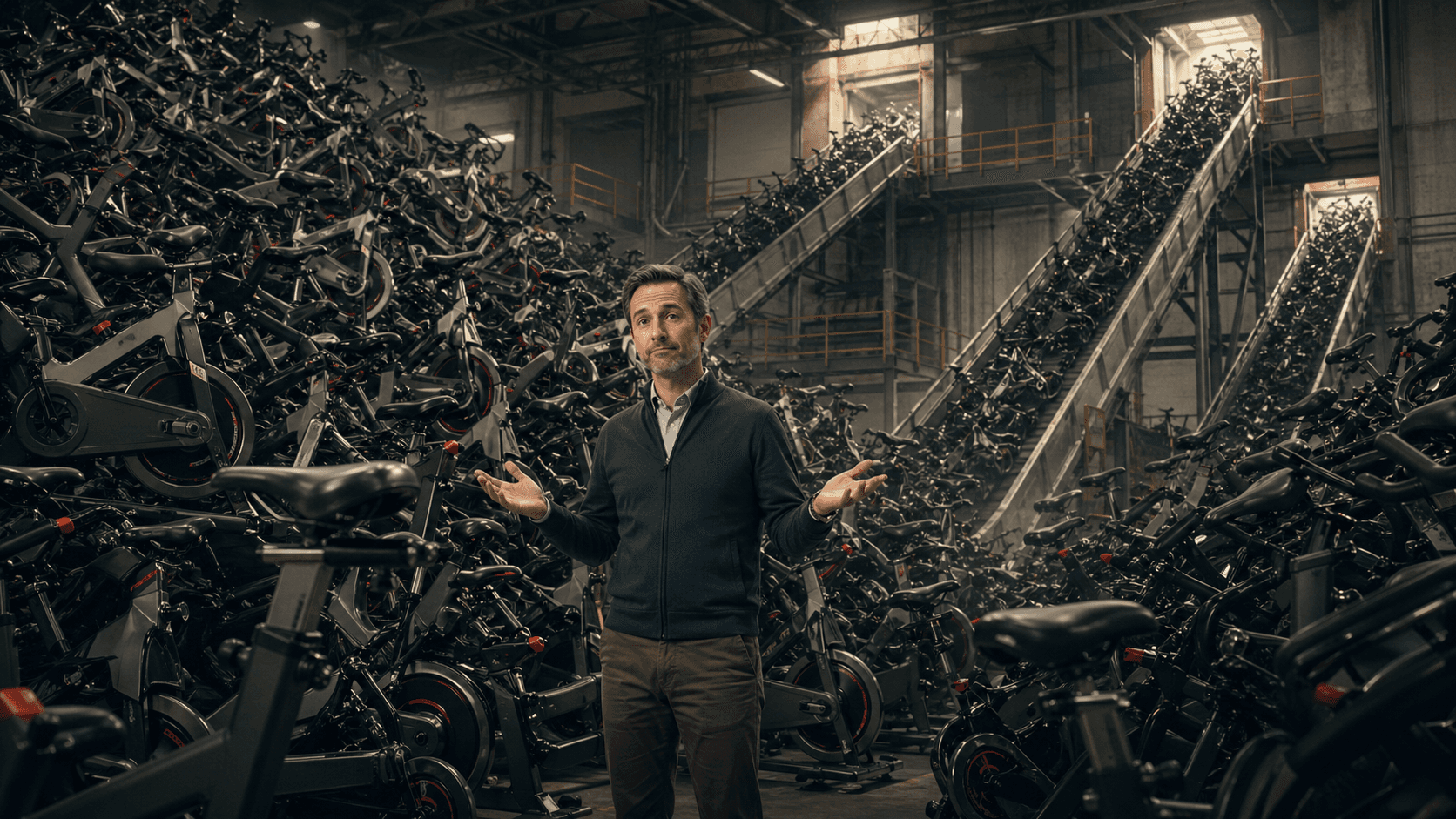
Consumer demand is fickle. In 2020, bike manufacturers bought forward on pandemic demand. Peloton did the same. When the curve collapsed, everyone acted like it had been obvious the whole time that people would not stay that into bikes forever. That was the lesson. Demand spikes are easy to narrate after they break. They are much harder to forecast while you are committing real capital against them. A few weeks of Twitter momentum is not a signal you bet a decade of capex on.
Prosumer subscriptions are economically upside-down. At $100 and $200 a month, a small fraction of power users burn tokens far past what their subscription revenue can cover. That's a fixed-revenue, variable-cost line that only works if most subscribers stay well under quota. The moment agentic wrappers let every subscriber run hot 24/7, the math breaks. OpenClaw isn't just a token inferno. It's a low-signal cohort: high burn, weak pull on the flywheel Anthropic actually cares about.
Enterprise economics are proportional, and they compound. Usage scales with what customers pay. Workflows get wired into CI pipelines, internal tooling, agent scaffolds, security-reviewed integrations. Unseating an incumbent is expensive for everyone in the room. That's base load: stable, forecastable, and exactly the kind of demand you can safely buy compute against.
The Constraint Is Already Visible
Devin from Cognition is running a similar constraint in the open: explicit enterprise tilt, deliberate distance from hobbyist and one-off users. That does not mean every restriction is a master plan. It means compute-heavy AI companies are being forced to pick which customers they can afford to disappoint.
The AWS deal signed this week is the supply-side response: up to five gigawatts of Trainium capacity over the next decade, with an option on future Amazon silicon. The TPU exploration tells the same story from a different angle. Dario isn't ignoring the compute trade-off. He's diversifying silicon to manage it.
And the capex thesis was never hidden. On the Dwarkesh podcast, Dario walked through the math: buying forward on 10x revenue growth that slips to 5x is a bankruptcy event, with no hedge that could stop it. He wrote that down in public, then behaved consistently with it. That does not make the shortage good. It makes the restraint legible.
Notice also what Anthropic is not doing inside the crunch: they are not retreating on model quality to save compute. Opus 4.7 shipped with a denser tokenizer and more thinking per turn, which spikes per-query token burn. If compute were the only constraint, the obvious move would be lighter models and cheaper inference. Instead they're doubling down on quality output for customers who value reliability over throughput. Capability first, volume second. That is not a company running scared.
What This Means If You're Building On Them
If you're building on Anthropic, the signal is loud: align with the enterprise path or price in volatility on the prosumer edge. Quota tightening, policy reversals, and third-party-tool restrictions are going to keep happening for the customer tier they can least afford to subsidize.
If you're watching the OpenAI-versus-Anthropic horse race, stop reading every policy edit as a death spiral. These are two companies with different customers, different capex discipline, and different compute postures. OpenAI is absorbing the overflow. That's not proof Anthropic is losing. It's proof that Anthropic is protecting the accounts it was already built around.
And if you're sitting inside an enterprise making buying decisions right now, the read is simpler than the drama on Twitter suggests. Anthropic is the vendor betting they can wire into your compliance review and your CI loop for the next five years. Price in that posture. The prosumer chaos isn't the signal your procurement team should be pricing on.
The Open Question
Did Anthropic screw up, or did demand simply outrun a capacity plan that was cautious for good reason?
The uncomfortable answer is both less flattering and less damning. They do not have enough compute. That part is real. They would love to serve the demand. That part is also real. The nuanced part is whether the alternative was actually obvious before the demand arrived, or whether everyone has forgotten the last time we mocked an industry for buying too much capacity against a temporary curve.
Get AI strategy updates in your inbox.