Apple's Vibe-Coding Ban Misses the Actual AI App Store Opportunity
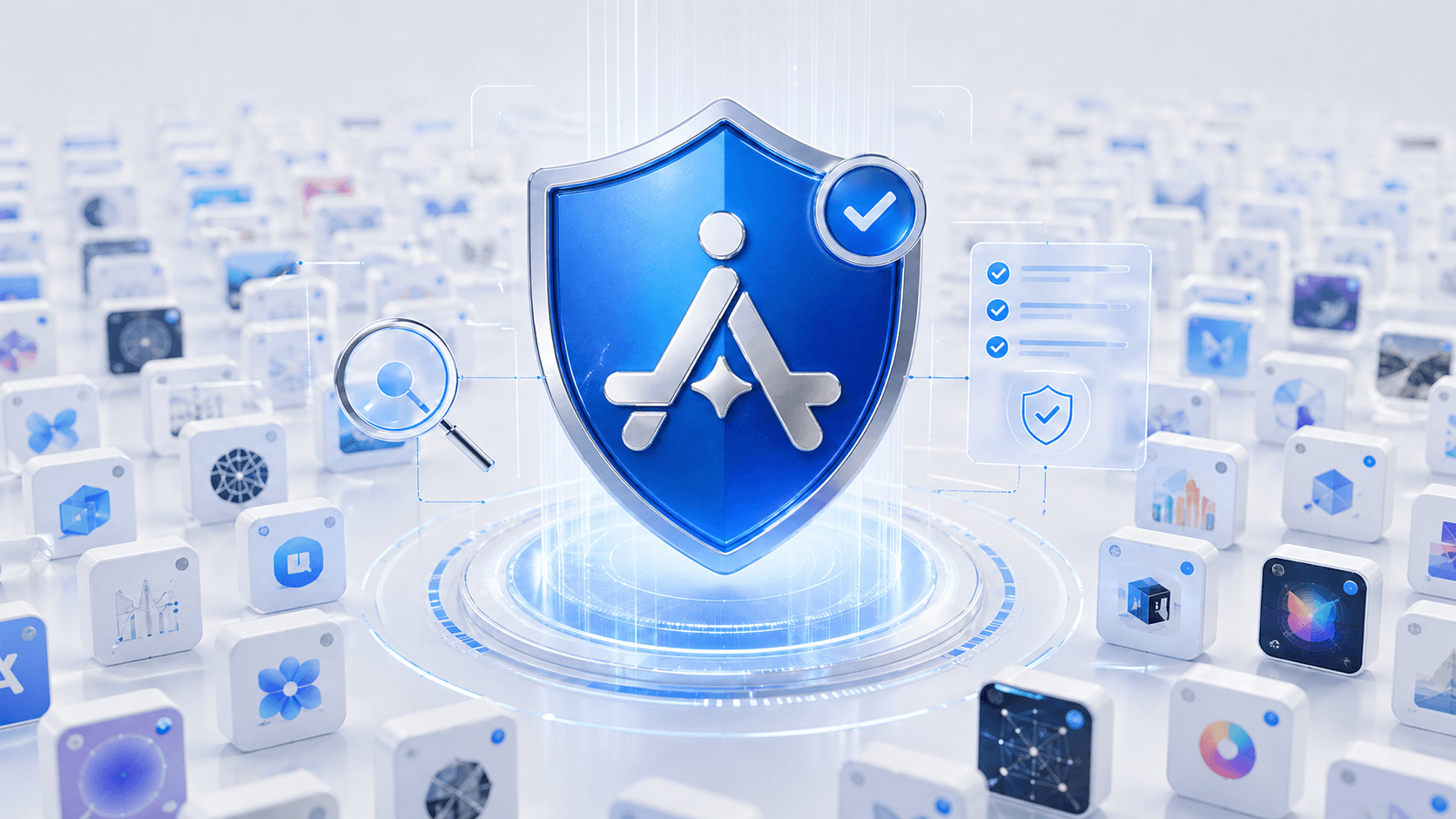
App creation is getting easier faster than app evaluation is getting better. That gap is where the next power center gets built.
Vibe-coded apps are flooding every platform. You can view them as categorically without value, or you can see what's actually happening: a lot of noise that users have to sort through to find software that's genuinely good. If you believe real apps and businesses will be built using AI, then there's a massive opportunity in helping users discover which ones are trustworthy. Apple banning vibe-coded apps isn't risk management. It's a company missing its own strategic moment.
If you can generate ten apps in a weekend, but users can't tell which one is useful and safe, shipping is no longer the bottleneck. Discovery and trust are.
That's why the reported posture of banning vibe-coded apps is such a strategic mistake.
The Build Layer Is Collapsing. The Trust Layer Is Not.
We're moving into a world where production is cheap. Prompt-to-app pipelines are getting better every quarter. Code generation quality keeps climbing. Distribution channels are filling up with more software than any human can manually evaluate.
So the game changes.
When supply explodes, curation gets expensive. When curation gets expensive, trust becomes the product.
This is the part many platform companies still seem to miss. If anyone can create, the winner is not the company that blocks creation. The winner is the company that helps users navigate abundance without getting burned.
Apple is uniquely positioned to own that layer.
What Apple Could Build Instead of Banning
Apple doesn't need to win the chatbot race to win the next phase of the app economy.
It already has the key assets:
- A global distribution channel with built-in consumer trust
- A mature app review operation with years of policy and abuse intelligence
- A brand associated with privacy and safety
- Existing economic relationships with developers at scale
That's enough to launch a much stronger strategy than prohibition.
Imagine a dedicated App Store layer for AI-built apps, clearly labeled and easy to filter. Not hidden. Not treated as suspicious by default. Tagged as a new class of software so users know what they're trying.
Then add ranking systems that score two dimensions users actually care about:
- Effectiveness: Does this app solve the job it claims to solve?
- Security posture: Does this app handle data safely, transparently, and consistently over time?
That would turn App Store review from a binary gate into an ongoing trust graph.
The Real Product: Continuous Verification
The old review model was designed for slower release cycles. AI-built apps break that assumption.
A small team can now ship major updates constantly. Some updates improve the app. Some quietly introduce risk. In that environment, one-time review isn't enough.
Apple could offer continuous AI-assisted security and behavior scanning as an opt-in developer service:
- Detect risky permission changes between versions
- Flag suspicious data flows before release
- Compare claimed functionality to observed behavior
- Monitor dependency risk and known exploit exposure
- Alert builders when platform policy or security best practices shift
Developers would pay for this.
Users would trust apps more because of it.
Apple would strengthen both marketplace quality and revenue diversification without inventing a new business from scratch.
Discovery Is the Second Opportunity
Security is only half the problem. Discovery is the other half.
In a high-volume app environment, star ratings and keyword stuffing won't cut it. Users need better signal routing.
Apple could build a recommendation system that combines:
- Verified app quality signals
- Real retention and completion behavior
- Category-level performance benchmarks
- Context-aware recommendations by user intent
Not "top charts." Not paid placement disguised as relevance. A recommendation surface that helps people find tools that work.
And this is where platform advantage compounds. Apple sees cross-category behavior patterns at scale. It can detect what apps stick, what apps churn, and what apps create repeated value. That's data most individual developers will never have.
If this system is designed well, it also helps builders. Good products from small teams get discovered faster. That increases app quality competition on merit, not just marketing budgets.
Connecting Users to Builders Is a Strategic Moat
There's also a social layer Apple could own: transparent builder credibility.
If AI lowers the cost of producing software, identity and accountability matter more. Users should be able to answer basic trust questions before they install:
- Who built this?
- What else have they shipped?
- How quickly do they patch issues?
- How consistently do their apps pass review and monitoring?
That doesn't need to become a social network. It just needs to become legible.
A builder reputation graph tied to app quality and security outcomes would be hard to copy and extremely valuable in an agent-heavy future.
Why the Ban Mindset Is Reckless
Blocking a creation mode because it's new is not risk management. It's category denial.
The risk is real. AI-built apps can be sloppy, insecure, or deceptive. But that risk is exactly why the verification and discovery layer matters. If your platform already runs the largest curated app marketplace on earth, this is your moment to lead.
Banning doesn't stop the trend. It routes innovation elsewhere.
That's the part that feels reckless from a business perspective. The future of app ecosystems will be shaped by who helps users decide what to trust when software supply is effectively infinite.
Apple could have been the default trust router for that era.
It still can.
The open question is whether second-mover discipline still works when platform shifts compress from years to quarters.
When software creation becomes cheap, the company that wins is the one that makes trust and discovery feel obvious.
Get AI strategy updates in your inbox.